When Land Disappeared Under Water, Food Production Moved Above It
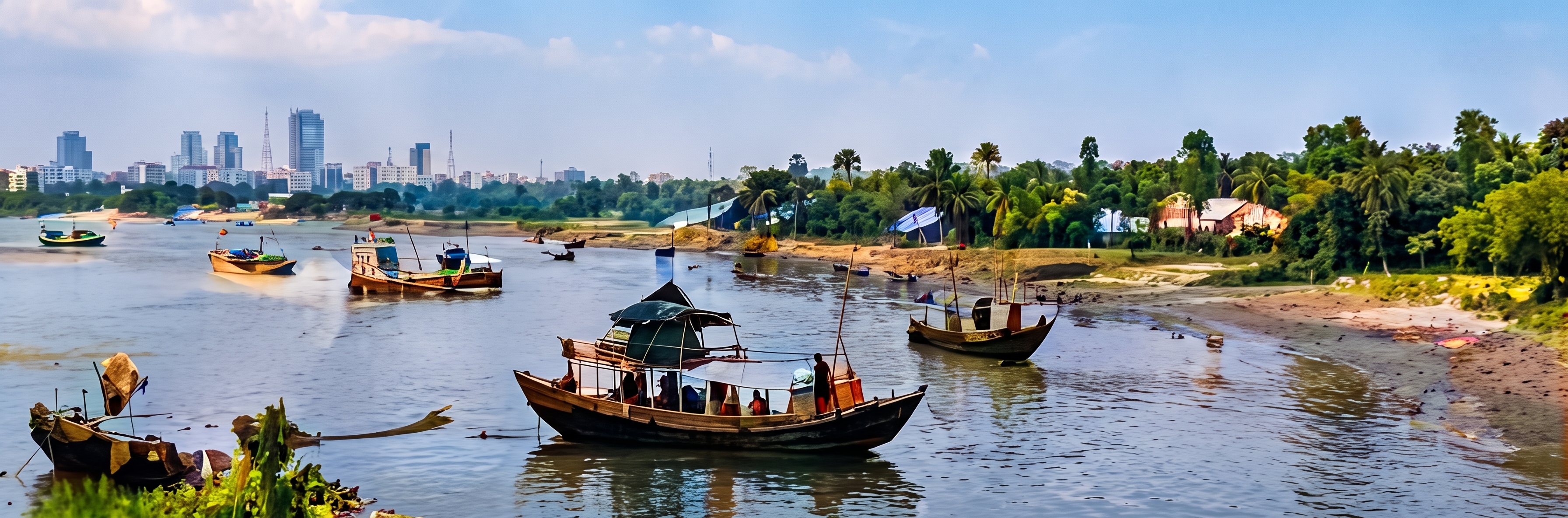
In waterlogged coastal Bangladesh, where land remains submerged for months, communities redesigned agriculture itself—so survival did not depend on dry land.
Context (Initial Reality)
In the southwest coastal region of Bangladesh:
- Homesteads remain under 4 feet of water for up to 6 months.
- Families are forced to leave homes during monsoon.
- Vegetable intake drops to 30–70g per day (far below the 200g minimum).
At the same time:
- Salinity is increasing.
- Land-based agriculture is no longer viable.
- Women—traditionally responsible for household food—lose their production space.
System Failure
The failure was structural:
- Agriculture systems assumed land availability.
- Adaptation programs focused on inputs, not conditions.
- No integration of waterlogged realities into farming design.
Risk (waterlogging) was known. But systems did not adapt to it.
Intervention (What Was Changed)
Instead of trying to remove water, the system changed where production happens:
- Bamboo platform constructed above water.
- Clay pots (“Nada”) used as soil containers.
- Soil + organic compost mix (3:1 ratio).
- Crops: bottle gourd, pumpkin, cucumber.
Key Shift: Land-based agriculture Elevated micro-production system.
Human-Level Impact
- Households regain minimum nutritional intake.
- Women regain productive agency.
- Families reduce dependence on external food supply.
To: producing under stress
Scalability & Global Relevance
The coastal zone acts as a real-world simulation of sea-level rise. What is happening here is a preview of future global conditions. This innovation shows how communities can survive when land disappears.
Resilience does not begin when water is removed. It begins when systems function—even when water remains.